


 Home
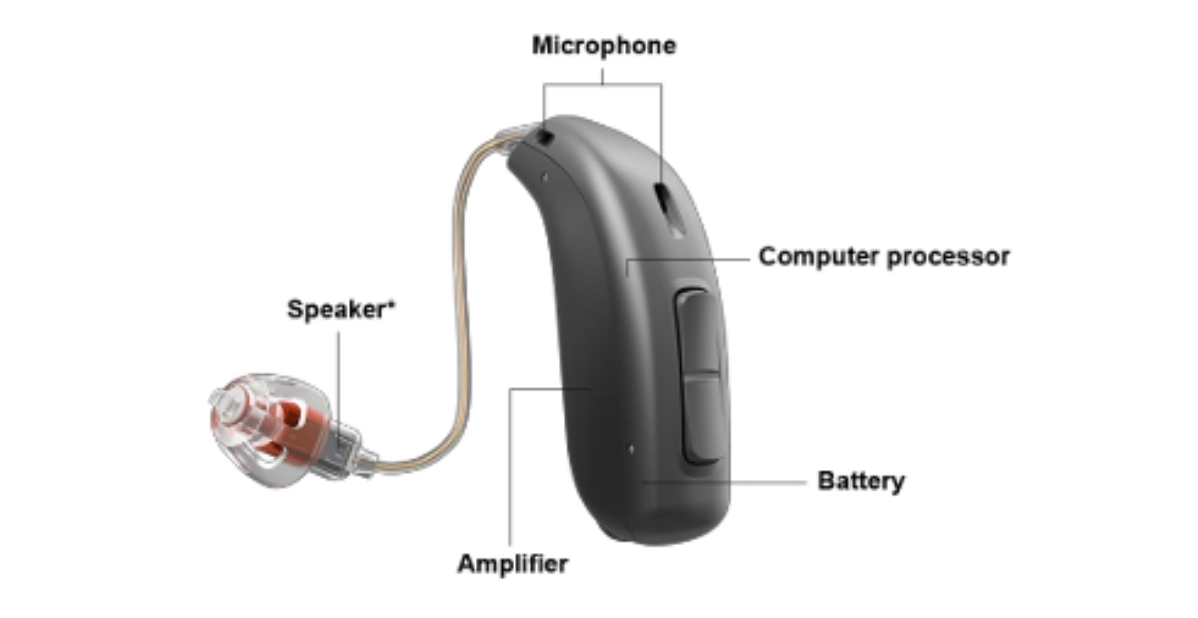
HomeHearing aids are designed to improve speech understanding, provide comfortable amplification, and enhance environmental awareness within an extremely compact form factor. Their audio systems often combine miniature microphones, receivers, digital signal processing (DSP), and carefully engineered acoustic designs to deliver consistent performance across a wide range of listening environments. The designs also prioritize speech clarity, listening comfort, and natural sound quality while minimizing distortion, feedback, and unwanted background noise.
What distinguishes hearing aids from many other consumer audio devices is the integration of sound capture, signal processing, and personalized amplification into a single wearable system. Instead of focusing exclusively on audio playback, they are engineered to improve communication by using directional microphones, adaptive noise reduction, feedback management, and automatic adjustments for changing acoustic environments. This combination of acoustic engineering and signal processing enables hearing aids to provide individualized listening support while maintaining awareness of the surrounding environment.
Audio Precision offers a complete range of testing solutions for hearing aids. AP also meets both domestic and international industry standards—IEC 60118-0, and ANSI/ASA S3.22. And with Bluetooth 5 and LE audio testing capabilities, APx is ready to handle testing of both today's and tomorrow's hearing aids.
Technote 133: Hearing Aid Test with APx500 Audio Analyzers
TN133 discusses industry standard tests used to characterize the electro-acoustic performance of hearing aids. Specific standards addressed are IEC 60118-0:2015 and ANSI/ASA S3.22:2014. Testing of hearing instruments is reviewed in the context of measurements performed with APx500 Series audio analyzers and includes corresponding APx500 measurement software project files.
Additional Resources
Visit Our Technical Library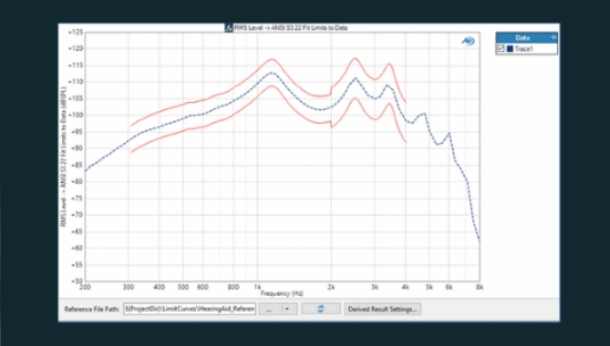
Hearing Aid Test with APx500 Audio Analyzers
This blog post explains the challenges of hearing aid testing, reviews the key ANSI and IEC standards, and highlights the APx500 features designed to simplify compliance testing and acoustic performance analysis.
Read More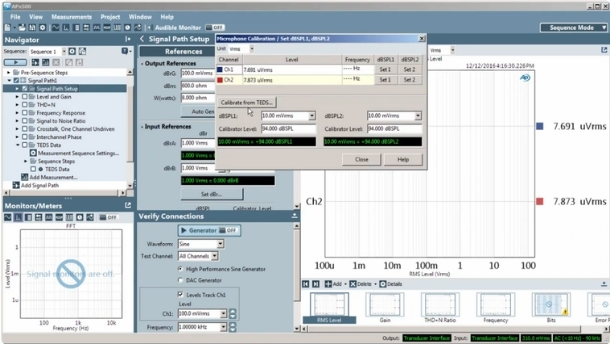
Quick Tip: APx1701 Transducer Test Interface
In this quick tip video, an Audio Precision expert provides an overview of the APx1701 Transducer Test Interface, an APx accessory device for electro-acoustic test applications.
Watch Now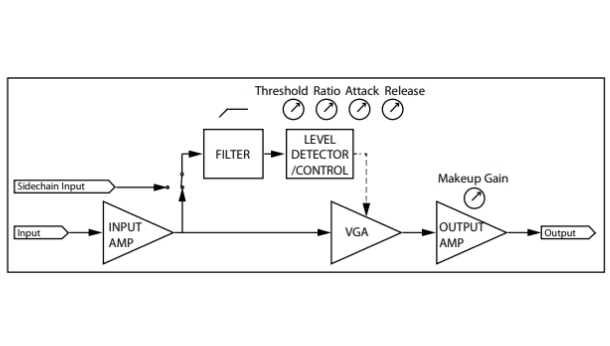
Measuring AGC with APx Audio Analyzers
This technote discusses the fundamentals of automatic gain control (AGC), how to measure AGC in hearing aids and other audio devices using the APx attack-and-release measurement plugin, and how to make other, related performance measurements.
Download Now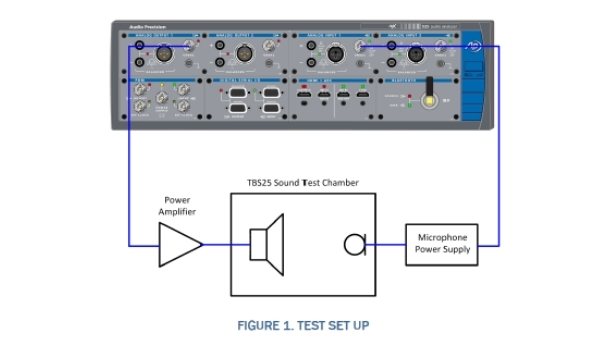
Leveled Acoustic Output
In this technote, we describe how to configure an APx500 series analyzer for leveled acoustic output. A project file which automates this process using the APx sequencer is also available.
Download Now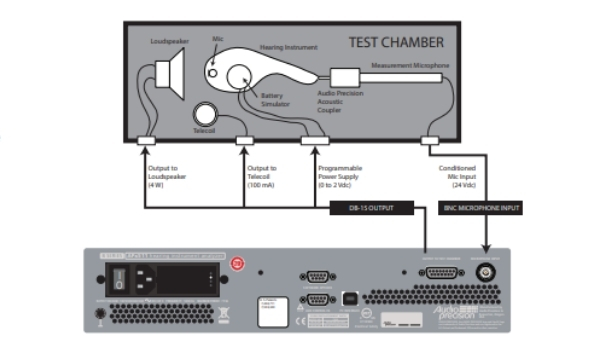
APx511 Datasheet
This datasheet covers information on the key features, specifications, and software options for the Audio Precision APx511 audio analyzer.
Download Now
Hearing Aid Test Solutions
Browse All Products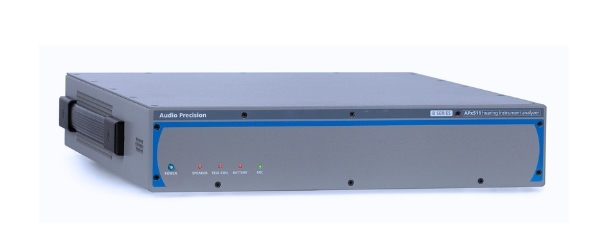
APx511B
Designed for use by hearing aid manufacturers conducting product research and development, verifying product performance, and verifying performance for hearing aids returned for evaluation or service. Typical test time is two minutes using an 80-frequency multitone and up to three minutes using single-frequency swept measurements.
Learn More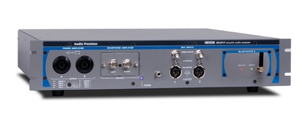
APx517B
Perfect for customers that require more than a single microphone input or that require an additional digital I/O module such as Bluetooth. This analyzer is specifically designed, configured, and priced to meet production-line needs and set up time is less than five minutes.
Learn More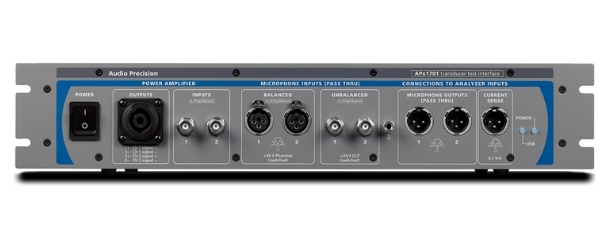
APx1701 Transducer Test Interface
The features in the 1701 allow for hearing aid tests with two class AB power amplifiers and two microphone input channels, providing constant power current for measurement microphones.
Learn More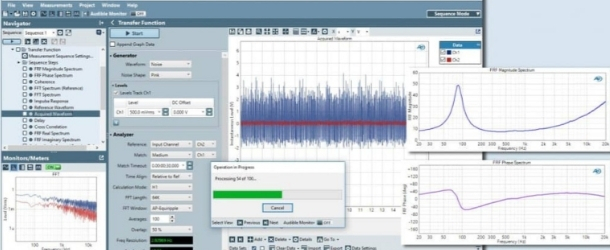
APx500 Software
APx500 is a powerful and versatile audio measurement software platform designed by AP, serving as a common software platform for all APx audio analyzers.
Learn More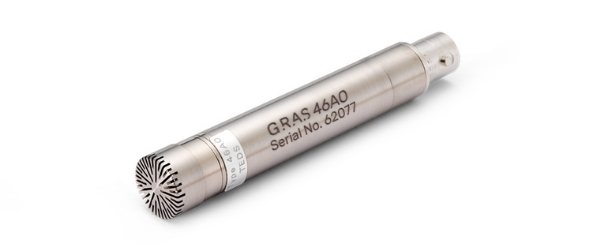
GRAS Acoustics 46AO Microphone
The 46AO is a 1/2" CCP microphone set for wide-frequency pressure measurements. Its LEMO equivalent is 46AG.
Learn More
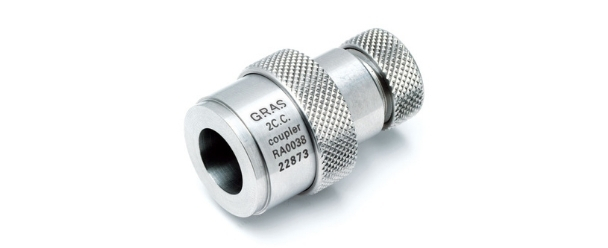
GRAS Acoustics RA0038 Coupler
The GRAS RA0038 Coupler is a standard 2 cm³ Coupler according to IEC 126 and ANSI S3.7-1973. It uses a ½" microphone with a suitable preamplifier.
Learn More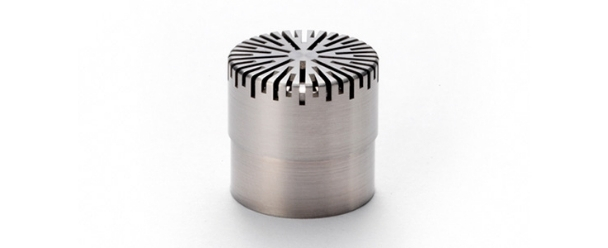
GRAS Acoustics 40AG Microphone
The 40AG is an IEC 61094 WS2P ½″ is a high-precision condenser microphone made according to IEC 61094-4 requirements and is ideal for coupler measurements in both lab and production environments. It is extremely robust and can measure sound pressure levels up to 160 dB within 3.15 Hz to 20 kHz.
Learn More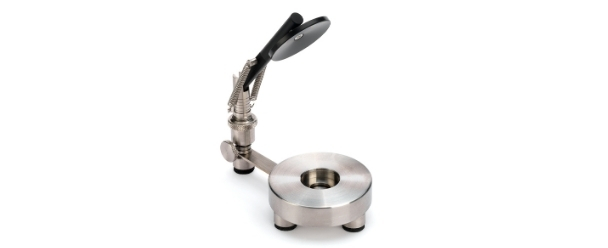
GRAS Acoustics RA0052 Test Jig
The GRAS RA0052 is for use with GRAS couplers and artificial ears. It has an adjustable spring-loaded arm to exert a variable force on the test object.
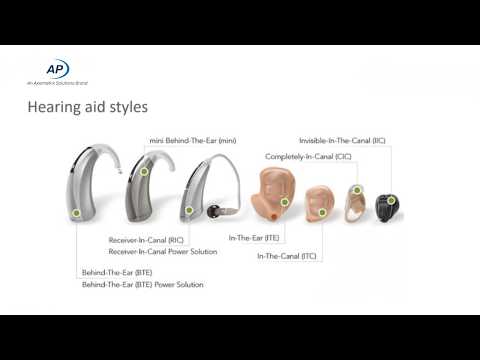
Learn MoreHearing Aid Audio Test
In this video, an Audio Precision expert provides an overview of hearing aid testing, covering ANSI and IEC standards, test requirements, equipment considerations, and a practical demonstration of the measurement process.
Frequently Asked Questions About Hearing Aid Testing
The measurements listed below are used when testing according to IEC 60118-0 and ANSI/ASA S3.22 standards:
- OSPL90 Frequency Response
- Full-on Gain Frequency ResponsE
- basic frequency Response
- Total Harmonic Distortion
- Equivalent Input Noise
- Steady State Input Output
- Attack and Release
- Intermodulation Distortion
- Battery Current
- SPLIV Curve (ANSI/ASA S3.22 only)
- Equivalent Test Loop Sensitivity
- HFA MASL (IEC 60118-0 only)
For air conduction hearing aids, key audio test standards include American Standard ANSI/ASA S3.22, Specification of Hearing Aid Characteristics, and Parts 0 and 7 of the IEC 60118 series of international standards, Electroacoustics – Hearing Aids. The IEC 60118-7 series is nearly identical to ANSI/ASA S3.22; both standards are intended for production test of hearing aids covering the frequency range from 200 Hz to 5 kHz. Part 0 of the IEC 60118 series specifies many of the same tests as IEC 60118-7 and ANSI/ASA S3.22, but it covers a wider frequency range (200 Hz to 8 kHz), and it is intended more for R&D applications. These R&D applications can include developing specifications for a new hearing aid model or qualifying a model of hearing aid for sale in a country or regional jurisdiction.
Read More ›With even the simplest ones, hearing aids include microphones, a power amplifier, digital signal processor, loudspeaker and controls integrated into a tiny, battery-powered package. Add in optional features like noise reduction, microphone arrays/beamforming, telecoils, wireless connectivity, remote control, variable DSP programs, direct audio input and synchronization between left and right sides, and things can get interesting.
Read More ›