


 Home
HomeSmart speakers are designed to balance clear voice reproduction, room-filling sound, and reliable speech recognition within a compact enclosure. Their audio systems often combine carefully tuned drivers, digital signal processing (DSP), and engineered acoustic designs to deliver consistent performance across a variety of listening environments. The designs also prioritize intelligible playback at both low and moderate volumes while minimizing distortion and unwanted resonance.
What distinguishes smart speakers from many other consumer audio devices is the integration of listening, playback, and adaptive processing into a single system. Instead of focusing exclusively on playing music, they are engineered to support voice interactions by using microphones, echo cancellation, and automatic audio adjustments for real-world environments. This combination of acoustic engineering and signal processing enables smart speakers to respond effectively while continuing to deliver enjoyable everyday audio.
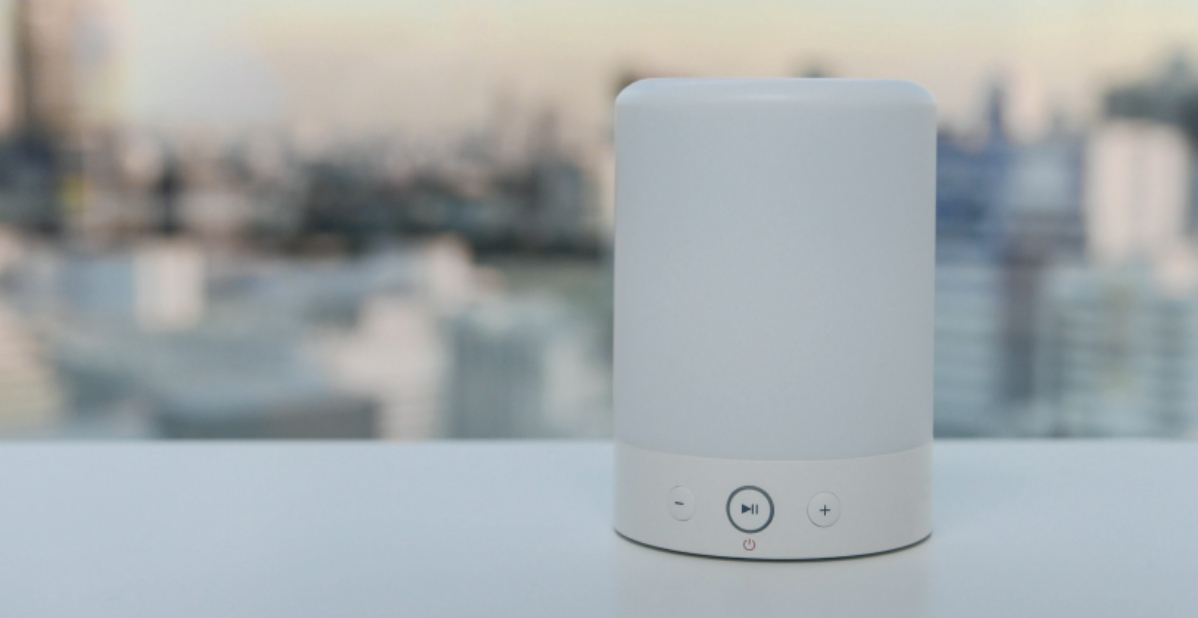
Smart Speaker Acoustic Measurements
Smart speakers are a class of consumer audio device with unique characteristics that make testing their audio performance difficult. In this application note, we provide an overview of smart speaker acoustic measurements with a focus on frequency response—the most important objective measurement of a device’s audio quality.
Additional Resources
Visit Our Technical Library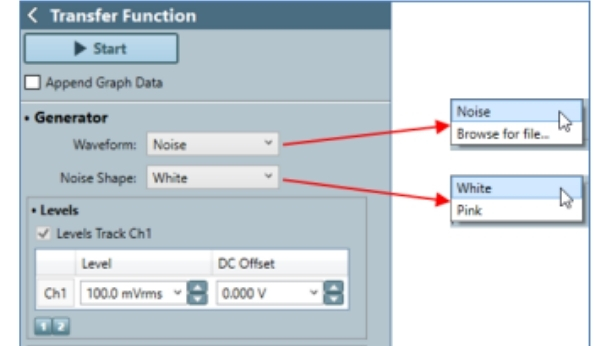
Utilizing Transfer Function Measurements with APx500 Audio Analyzers
This technote provides background information on transfer function measurements in general, followed by practical examples of applying this measurement technique to difficult audio test problems.
Download Now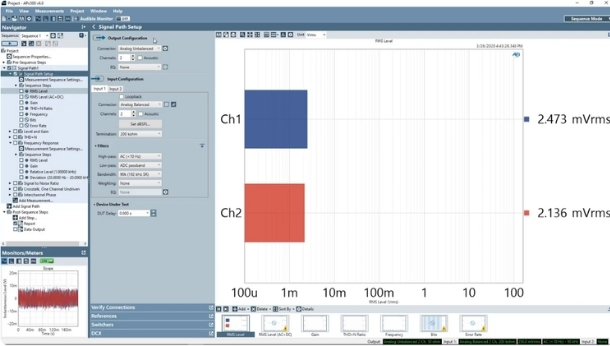
Introduction to APx500 Software
In this session, we provide an introduction to APx500 Software, including discussions on Bench Mode and Sequence Mode, setting up the signal path, adding measurements and generating reports.
Watch Now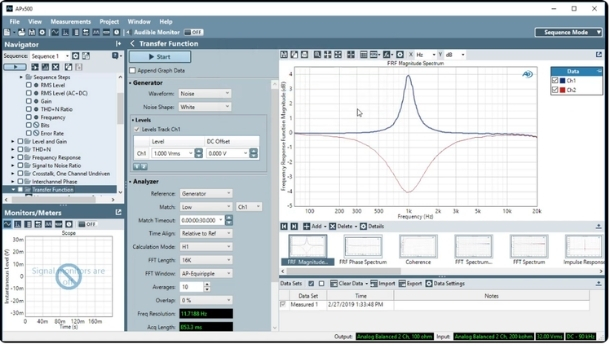
Transfer Function Measurement
This Audio Precision Quick Tip video provides an overview of the Transfer Function measurement, introduced to APx500 measurement software in release v5.0.
Watch Now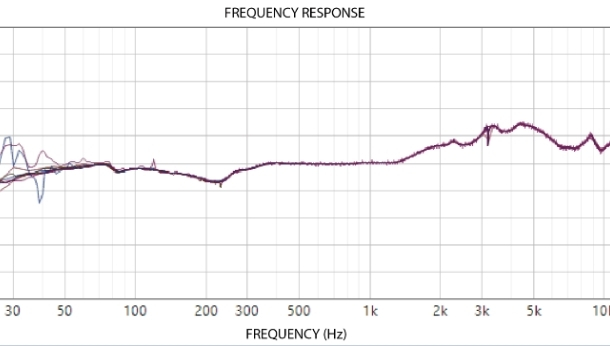
How Many Ways Can We Measure Frequency Response?
APx500 software provides many ways to measure frequency response, and because it is such a fundamental metric, our software provides many ways with which frequency response can be measured.
Read Now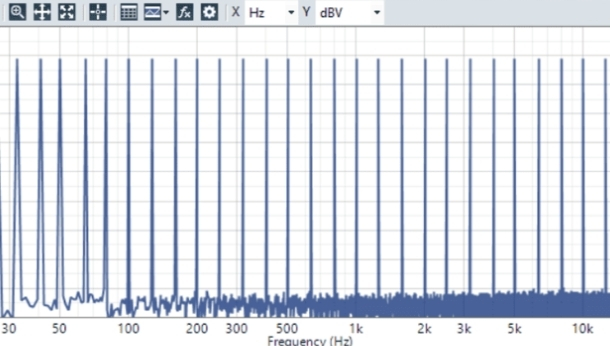
10 Ways to Reduce Testing Time in APx500
If you're looking to accelerate your audio testing, this article shows how APx500 software can help you speed up your audio measurements.
Read NowSmart Devices Test Solutions
Browse All Products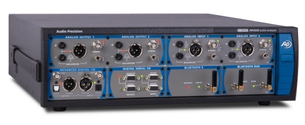
APx555B
Low noise, low distortion, and flat response for loudspeaker, headphone and microphone measurement.
Learn More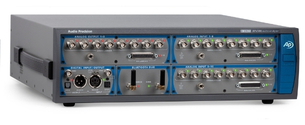
APx58xB
Channel count meets broad range of digital I/O for simultaneous, multichannel audio test. 8 or 16-channel modular audio analyzers.
Learn More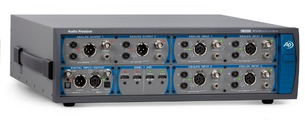
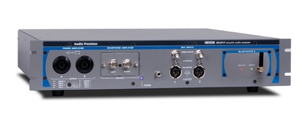
APx517B
Acoustic analyzer that's deal for production-line needs where cost and setup time are critical.
Learn More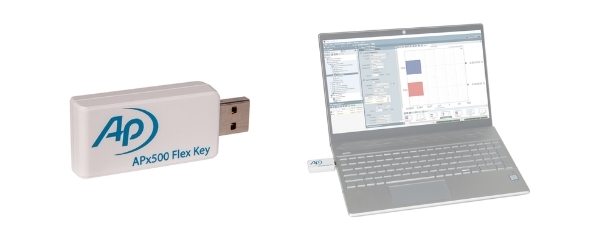
APx500 Flex
Software only option designed specifically for very cost-sensitive production test applications.
Learn More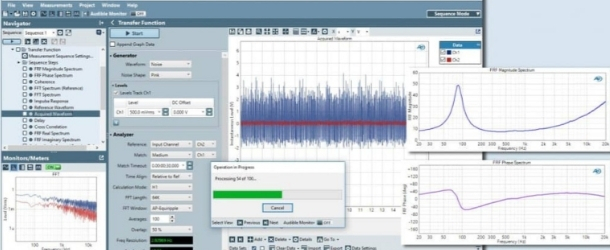
APx500 Software
APx500 is a powerful and versatile audio measurement software platform designed by AP, serving as a common software platform for all APx audio analyzers.
Learn MoreSmart Speaker Audio Test
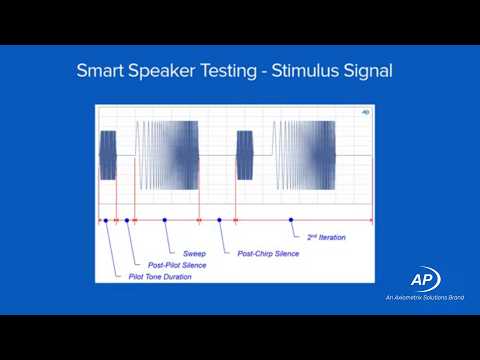
This brief video provides an overview of smart speaker testing in the context of the APx500 audio measurement software, focusing on the ability to use the log-swept sine—also called chirp or continuous sweep—signal in an open-loop test setup.
Frequently Asked Questions About Smart Devices
The primary audio paths for a smart speaker are between the device and the IVA or a network server using the Internet with a Wi-Fi or wired connection. On the input side, a speech signal containing a spoken command is sensed with the device’s microphone array, digitized and then uploaded to the IVA for signal processing and command interpretation. On the output side, digital audio content is transmitted from a Web server to the device, where it is converted from digital to analog, then finally to an acoustic signal as it is played over the device’s loudspeaker system.
Read More ›Testing the overall end-to-end performance of a smart speaker’s primary input and output audio paths can be quite challenging for the following reasons:
- Input to and output from a smart speaker are both acoustic, and acoustic test is by its nature more complex than electronic (analog or digital) audio test. Acoustic tests require calibrated microphones, usually an anechoic test chamber, and a quality loudspeaker system to stimulate DUT microphones.
- Smart speakers are inherently open-loop devices. On the input side, a signal (typically speech) is captured, digitized and then transmitted to a server somewhere as a digital audio file. To assess the input path performance, the audio file must be retrieved from the server and analyzed in comparison to the signal that was generated in the first place. On the output side, audio content that originates as an audio file on a server is streamed to the device where it is converted to analog and played on the device’s loudspeaker system. To assess the output path performance, the device’s loudspeaker output must be measured with a measurement microphone and compared with the original signal from the server. The original signal is often in the form of an encoded audio signal (e.g., MP3 or AAC), which requires that it be decoded before analysis.
- The A/D and D/A converters in the device will invariably have different sample rates than the audio analyzer, requiring some form of compensation during analysis.
One of the key attributes of transfer function analysis is that it provides a means of measuring the frequency response of a device using any broadband signal, including speech and music. This makes it an ideal choice for analyzing devices used for speech communication (i.e., smart speakers, smartphones, headset microphones, etc.). Many of these devices incorporate DSP algorithms that require the use of speech signals, and some are designed to block sinusoidal signals altogether. Transfer function analysis greatly simplifies measuring the frequency response of such devices.
Learn More ›An interaction with a smart speaker begins with a specific “wake word” or phrase, followed by a command. In their normal operating mode, smart speakers are in a semi-dormant state, but are always “listening” for the wake word, which triggers them to acquire and process a spoken command. In terms of speech recognition, smart speakers themselves are only capable of recognizing the wake word (or phrase). The more computationally-intensive speech recognition and subsequent processing is done by the Intelligent Virtual Assistant on a connected server. Depending upon the evaluation being performed, the wake word may be an integral part of the test process.
Read More ›