


 Home
HomeLoudspeakers come in a huge range of sizes and types for a myriad of applications. Their performance must meet the needs of these applications, and testing them is therefore essential and often difficult.
To measure sound levels accurately requires precision measurement microphones and supporting electronics, which have a known, stable sensitivity and flat frequency response over the frequency range of interest. Acoustic environments have interactions (e.g. walls, objects, temperature, and humidity) which, left uncontrolled, can dramatically and unpredictably impact the results of measurements taken by the engineer. Despite the challenges, when recommended procedures are followed using quality test equipment, it is possible to make good, repeatable loudspeaker measurements.
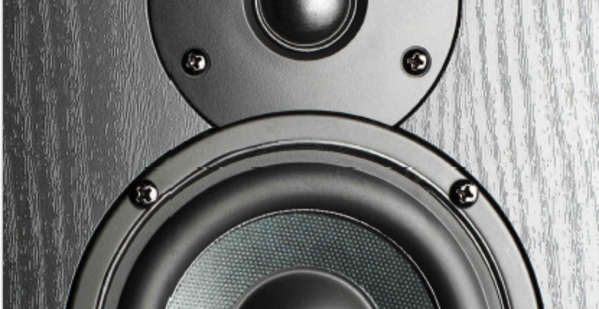
Loudspeaker Electroacoustic Measurements
In this application note, we provide an overview of the key electroacoustic measurements used to characterize the performance of loudspeaker drive units and loudspeaker systems. We focus on the most important objective measurements and refer to industry standards for guidance:
• Frequency response
• Sensitivity
• Input voltage/power
• Impedance & Thiele-Small parameters
• Directivity
• Distortion
Additional Resources
Visit Our Technical Library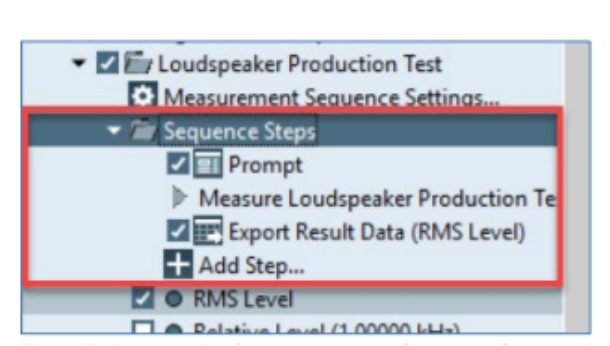
Production Test with APx Audio Analyzers
In this technote, we discuss features in the APx500 measurement software that support the creation of automated production test sequences, with a focus on electro-acoustic test.
Download Now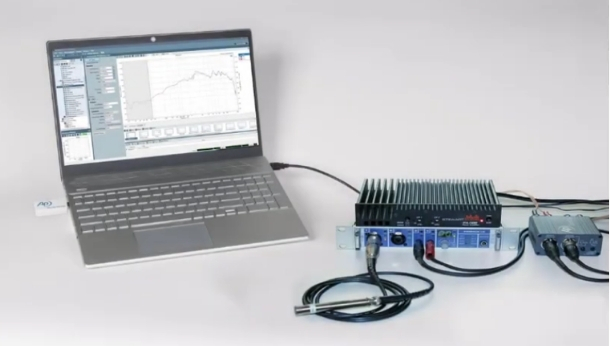
Loudspeaker Test with APx500 Flex
In this Quick Tip video, we briefly discuss how to perform loudspeaker testing with APx500 Flex and an off-the-shelf sound card or audio interface.
Watch Now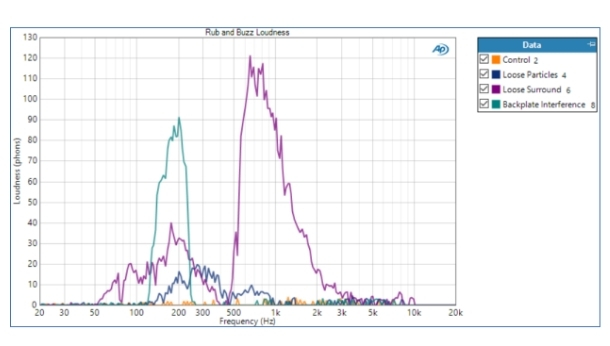
Loudspeaker Rub and Buzz Measurements
Detecting Rub & Buzz is critical before products reach customers, and in this application note, we introduce what it is and define four detection results used on production lines.
Download Now
Loudspeaker Acoustic Measurements in Ordinary Rooms
Learn how to achieve accurate loudspeaker frequency response measurements without an anechoic chamber using APx500's quasi-anechoic Acoustic Response measurement.
Read More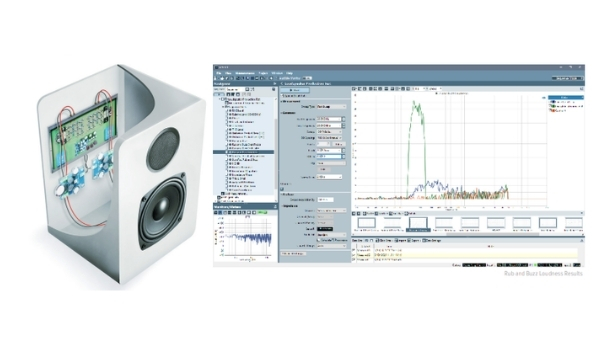
Electro-Acoustic Options Datasheet
The Electro-Acoustic test suite software options for APx analyzers form a comprehensive solution and includes the broadest set of methodologies available for rub & buzz defect detection.
Download NowLoudspeaker Test Solutions
Browse All Products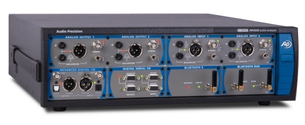
APx555B
Low noise, low distortion, and flat response for loudspeaker, headphone and microphone measurement.
Learn More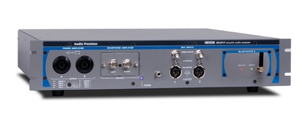
APx517B
Acoustic analyzer that's deal for production-line needs where cost and setup time are critical.
Learn More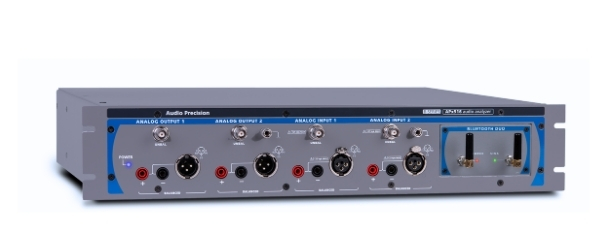
APx516B
Created for the production test applications but suitable for acoustic R&D applications. Configures with digital interface module option.
Learn More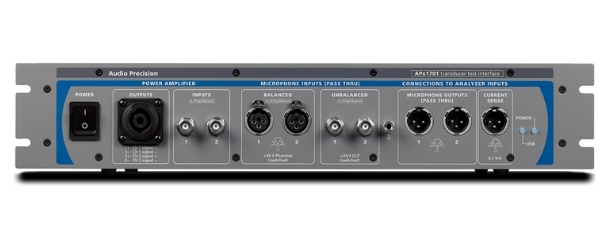
APx1701 Transducer Test Interface
Low noise, low distortion and flat response for loudspeaker, headphone, and microphone measurement.
Learn More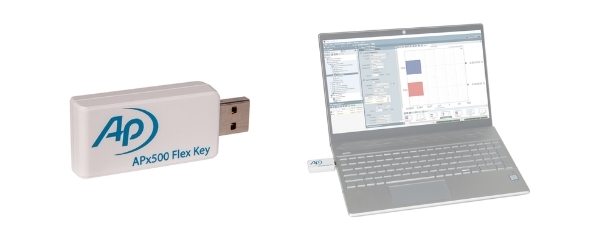
APx500 Flex
Software only option designed specifically for very cost-sensitive production test applications.
Learn More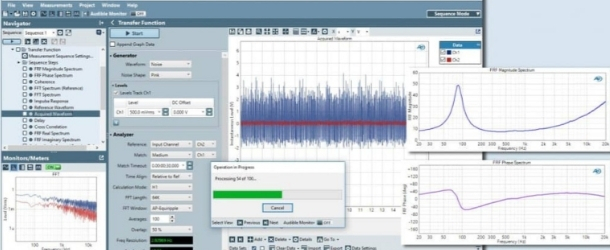
APx500 Software
APx500 is a powerful and versatile audio measurement software platform designed by AP, serving as a common software platform for all APx audio analyzers.
Learn MoreLoudspeaker Test Methodologies
In this Audio Test Session with APx, we discuss and demonstrate a variety of test methodologies for evaluating loudspeaker performance. Measurements demonstrated include frequency, frequency response, total harmonic distortion (THD), rub and buzz, impulse response, impedance and Thiele-Small. Test of a Bluetooth speaker is also demonstrated.
Frequently Asked Questions About Loudspeaker Testing
Accurate loudspeaker measurements rely on techniques that mitigate reflections. Common methods include:
- Free-field / outdoor testing
- Anechoic chamber test
- Ground-plane technique
- Time-selective (quasi-anechoic) techniques
- Near-field measurements
- Hybrid or combined techniques
The key international standard covering loudspeaker measurements is IEC 60268-5, Sound system equipment, Part 5: Loudspeakers. This standard applies to passive loudspeaker drive units and passive loudspeaker systems only; it does not apply to loudspeakers with built-in amplifiers.
Learn More ›Physical dimensions are extremely important in acoustics. The audible frequency range is generally considered to be 20 Hz to 20 kHz. The corresponding range of wavelengths of sound in air at room temperature is 17.2 m to 17.2 mm (56′ to 0.68″). So, at 20 Hz, a typical loudspeaker is tiny compared to the wavelength of sound, and it behaves like a point source, radiating uniformly in all directions. At 20 kHz, the opposite is true; a typical loudspeaker is large compared to the wavelength and its radiation pattern is radically different in all directions. Furthermore, the wavelength at 20 kHz is close to the diameter of a typical measurement microphone (12.7 mm or ½″), making measurements highly sensitive to small changes in microphone position.
Learn More ›